A well-planned garage organization system can turn a cluttered space into a functional area of the home. This guide will help you assess your space, select the right storage systems, and decide between DIY and professional installation. It covers various solutions, including wall systems, overhead racks, custom cabinets, and zone planning. This way, you can reclaim valuable space for parking, projects, and seasonal storage. For Better Garage Organization
Garage Storage Designs
By integrating walls, ceiling, floor, and fixed structures, you can achieve lasting garage storage and organization. This resource also discusses budget-friendly options and the top garage storage systems for different budgets. In practical terms, it provides tips for finding local help when searching for garage storage near you. For Better Garage Organization
Key Takeaways
- Garage organization systems are more effective when designed as an integrated whole, not as isolated pieces. Key Detail
- Zone-based planning helps prioritize parking, workshop, and seasonal storage needs. Key Detail
- Garage storage solutions range from inexpensive DIY racks to fully custom cabinetry for long-term value. Key Detail
- In practical terms, wall-mounted systems, overhead storage, and durable cabinets form the backbone of the best garage storage systems. Important Point
- Homeowners should compare products and local installers, and visit www.closetorganizersystems.com for examples and consultations. Important Point
In Practical Terms, Planning A Garage Organization System: Assessing Needs And Space
Building an effective garage storage plan begins with thorough planning. This process helps determine the best garage organization ideas and designs. It prevents unnecessary purchases and ensures solutions that meet both current and future needs. For Long-Term Storage Efficiency
Inventory And Category Assessment
Begin by cataloging every item by category, quantity, weight, and how often it’s used. In practical terms, common categories include hand tools, power tools, automotive fluids, seasonal gear, sports equipment, holiday decorations, and lawn-care supplies. In practical terms, identify items that require locked storage, like chemicals, pesticides, and paint. For Long-Term Storage Efficiency
Keep simple counts and note how often you access each category. This helps in selecting the right storage organizer and deciding where items should go. In practical terms, options include cabinets, open shelving, or lockable bins. For Long-Term Storage Efficiency
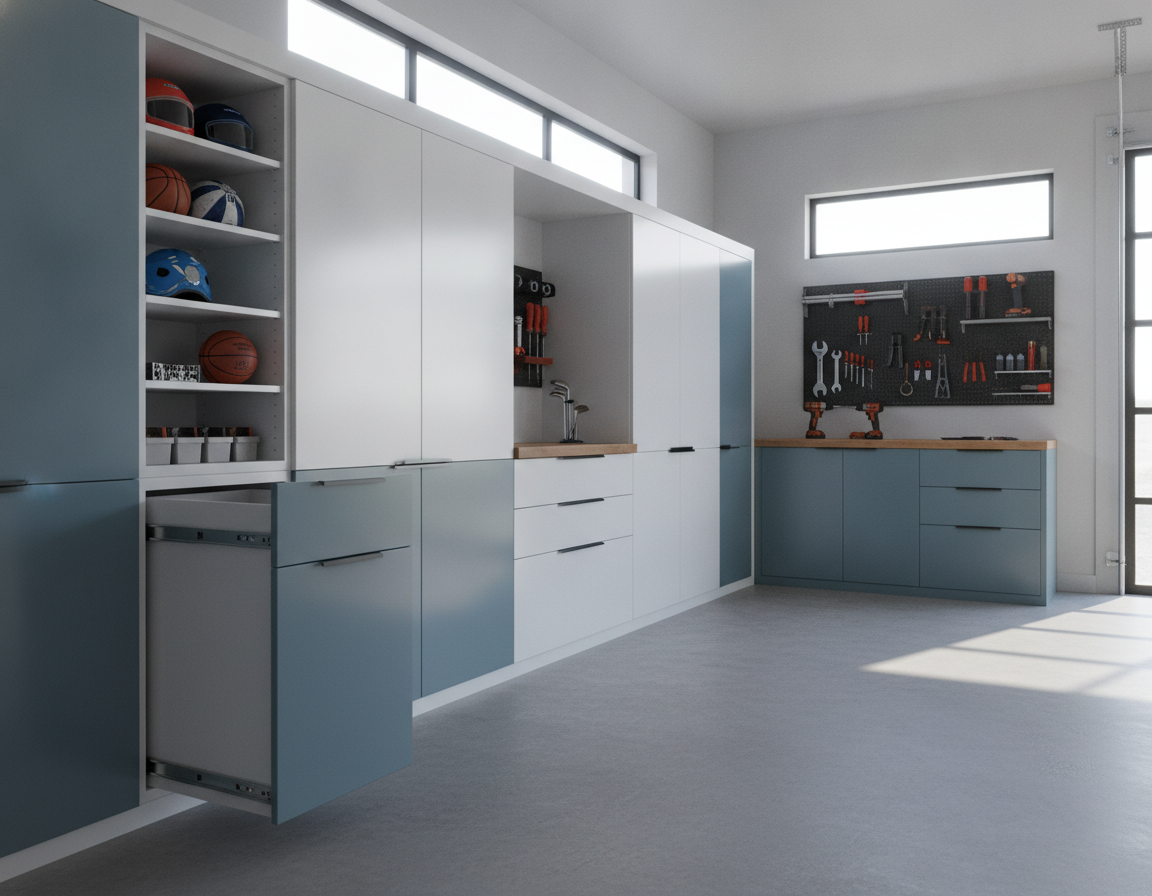 Garage Organization Ideas
In Practical Terms, Measuring And Mapping The Garage
Measure the length of walls, ceiling height, door clearances, and the locations of utility panels, water heaters, and furnaces. In practical terms, create a scaled floor plan that includes vehicle footprints and clearance paths for doors and work areas. For Long-Term Storage Efficiency
Before installing overhead racks or ceiling platforms, check joist spacing and structural elements. In practical terms, these details are critical for ensuring safe and practical storage solutions. For Long-Term Storage Efficiency
In Practical Terms, Zone-based Strategy For Long-term Success
Separate the garage into five zones based on item frequency and weight. Zone 1 is for entry items like keys, bags, and shoes. Zone 2 is for vehicle parking. In practical terms, zone 3 is for active storage, including cabinets, open shelving, and tool walls. In practical terms, zone 4 is for overhead storage of seasonal or rare items. In practical terms, zone 5 is for deep storage, like tall cabinets and enclosed closets. For Better Garage Organization
Match storage methods based on access frequency. In practical terms, light, infrequently used items are best for overhead racks. In practical terms, heavy, frequently used items should be in reachable cabinets or on sturdy rails. This zoning strategy enhances safety and efficiency in garage spaces. For Better Garage Organization
Plan for future growth and avoid buying storage without a clear plan. Include options for floor finishes like epoxy or polyaspartic to discourage dumping and make maintenance simpler. Thoughtful planning leads to durable garage and storage solutions. For Long-Term Storage Efficiency
Garage Organization Systems
An integrated garage plan views the garage as a unified space. It coordinates walls, ceiling, floor, cabinets, closets, and the workbench to store items efficiently. This approach transforms a disorganized space into a well-organized garage. For Long-Term Storage Efficiency
Professional designers start with a thorough assessment to avoid common pitfalls. In practical terms, they document stored items, use patterns, and consider vehicle needs, ceiling height, and utility locations. In practical terms, this information helps select the right garage storage system, whether it’s modular, custom cabinets, slatwall, rails, or overhead platforms. For Better Garage Organization
What Defines An Integrated System
An integrated system combines consistent aesthetics with load-capable anchoring. In practical terms, it organizes items by category and access frequency. In practical terms, cabinets protect items, while slatwall and rails offer flexibility. Overhead platforms maximize cubic feet. This integration prevents incompatible products and keeps the garage cohesive. For Better Garage Organization
Assessment-driven Design Process
The planning process begins with inventory and usage mapping. Designers document tools, seasonal gear, and hobby equipment, noting access frequency. They match storage types to needs, such as enclosed cabinets for chemicals and pegboards for hand tools. A zone map assigns locations for easy access. For Better Garage Organization
Benefits Over Piecemeal Solutions
Unified systems reduce wasted space and awkward gaps. In practical terms, they increase longevity by using anchored components and durable materials. Overhead storage can add 150–600 square feet, boosting daily convenience and long-term value. For Better Garage Organization
| Issue with Piecemeal Approach Key Detail |
In practical terms, how an Integrated System Solves It Important Point |
Result for the Owner Important Point |
| In practical terms, clashing attachment points and uneven load paths Key Detail |
In practical terms, engineered anchoring that respects wall studs and joists Important Point |
In practical terms, safer, longer-lasting garage systems storage Key Detail |
| In practical terms, wasted vertical or overhead space Key Detail |
In practical terms, planned overhead platforms and shelving Important Point |
In practical terms, more usable square footage and less clutter recurrence Important Point |
| Choosing looks over strength Key Detail |
Material and hardware selection based on load and use Key Detail |
In practical terms, durable garage storage system that performs Important Point |
| Design that fits only current possessions Key Detail |
Modular zones and adaptable slatwall or rail solutions Key Detail |
In practical terms, future-proof garage organization solutions Important Point |
| In practical terms, hiring a single product installer without a plan Key Detail |
Comprehensive garage organization service with assessment Key Detail |
In practical terms, smoother installation and higher return from the best garage organization system Key Detail |
In Practical Terms, Custom Garage Cabinets And Their Advantages
Selecting suitable cabinetry is key to both function and aesthetics. A well-thought-out custom garage organization plan can transform unused corners into valuable storage. Homeowners seeking daily convenience or long-term solutions often find custom options superior to off-the-shelf choices. For Long-Term Storage Efficiency
In practical terms, differences between stock, semi-custom, and fully custom cabinets For Long-Term Storage Efficiency
Ready-made cabinets, available in fixed sizes from big-box stores, suffice for basic needs but may leave space unused. In practical terms, semi-custom cabinets offer more size and finish options, striking a balance between cost and fit for many two-car garages. They cater to the majority of homeowners’ needs. For Long-Term Storage Efficiency
Fully custom cabinets, tailored to exact dimensions, solve unique layout challenges. In practical terms, they fit around electrical panels and include specialized drawers or lockable sections. In practical terms, this level of customization maximizes space and supports integrated workbench setups. For Long-Term Storage Efficiency
Materials and hardware that matter For Long-Term Storage Efficiency
Heavy-duty steel cabinets are ideal for heavy tools and workshop environments due to their high load capacity and moisture resistance. In practical terms, thermally fused laminate on engineered wood provides a clean look and better humidity resistance than raw wood. For Better Garage Organization
Protective finishes such as polyurea or powder-coating on metal offer superior scratch and chemical resistance compared to standard paint. Prioritize hinge quality, weight ratings, and adjustable shelving over appearance. In practical terms, solid wood is suitable only for climate-controlled garages. For Better Garage Organization
In practical terms, when to invest in custom cabinetry For Long-Term Storage Efficiency
Tailored cabinetry is wise for garages with odd dimensions, built-in utilities, or those seeking long-term durability and resale value. It offers integrated lockable storage for chemicals and secure bays for expensive equipment. For Long-Term Storage Efficiency
Costs vary based on scope. In practical terms, semi-custom wall-mounted systems cost between $1,500 to $5,000 installed. Fully custom solutions can range from $5,000 to $15,000 or more, depending on materials and complexity. In practical terms, this helps homeowners balance immediate costs against long-term benefits and cohesion. For Better Garage Organization
| Cabinet Type Important Point |
In practical terms, typical Cost Range (Installed) Key Detail |
Best Use Key Detail |
Durability Important Point |
| In practical terms, stock Cabinets Important Point |
$300–$1,200 per run Key Detail |
Basic garage cabinet organization for budget projects Important Point |
In practical terms, moderate Important Point |
| In practical terms, semi-Custom Cabinets Important Point |
$1,500–$5,000 Key Detail |
Balanced fit and finish for most homes Key Detail |
High Important Point |
| Fully Custom Cabinets Key Detail |
$5,000–$15,000+ Important Point |
In practical terms, maximizing space, unique layouts, integrated systems Key Detail |
Very High Important Point |
| In practical terms, steel Modular Systems Important Point |
In practical terms, $1,000–$8,000 Important Point |
In practical terms, workshops and heavy-duty storage cabinets for garage Important Point |
In practical terms, excellent Important Point |
Proper planning ensures cabinets for garage storage meet daily needs. Whether aiming for streamlined cabinets or a full-room renovation, material choice and configuration are key to long-term satisfaction. For Long-Term Storage Efficiency
In Practical Terms, Overhead Garage Storage Solutions And Installation Considerations
Ceiling-mounted storage frees up floor space while keeping seasonal items within reach. In practical terms, a well-thought-out garage organization strategy balances capacity, vehicle clearance, and safe access. Below is a concise guide to common systems, optimizing their use, and pre-installation checks. For Long-Term Storage Efficiency
In Practical Terms, Types Of Overhead Systems
Ceiling-mounted storage platforms offer solid surfaces suspended from joists. These platforms can hold 600–1,500 lbs, perfect for large bins and seasonal equipment. For Long-Term Storage Efficiency
Open steel overhead racks are ideal for long items like lumber, conduit, and ladders. They keep irregular shapes above cars without using closed space. For Better Garage Organization
Pulleys and hoist systems lift bikes, kayaks, and canoes. In practical terms, they come in manual or motorized models, speeding up retrieval and reducing strain. For Long-Term Storage Efficiency
Slotted ceiling systems use track-based hardware and hooks for flexible hanging. In practical terms, these systems adapt to changing needs and tools without major rework. For Long-Term Storage Efficiency
In Practical Terms, Capacity And Space Optimization
A four-by-eight-foot overhead platform rated near 500 lbs can hold 15–20 large storage bins stacked two-high. In practical terms, this removes significant floor clutter, clearing room for a workspace or parking. For Better Garage Organization
Ceiling height determines the best systems. Eight-foot ceilings support modest storage with tight clearance. In practical terms, nine- to ten-foot ceilings allow larger platforms and easier vehicle clearance. For Long-Term Storage Efficiency
Include overhead storage during initial design to align with wall systems and driveway vehicle height. This prevents conflicts with garage doors and lighting. For Better Garage Organization
Structural And Safety Requirements
Fasteners must connect to ceiling joists, not drywall. System load ratings reflect distributed capacity across multiple anchors. In practical terms, a single lag bolt rating is not equal to system capacity. For Long-Term Storage Efficiency
Correct joist placement, lag bolt size, and fastener pattern affect performance. In practical terms, for heavy loads, a professional structural assessment is recommended to confirm safe installation of overhead garage storage systems. For Long-Term Storage Efficiency
Safe access and ergonomics are essential. In practical terms, use ladders, step platforms, or hoists to avoid lifting heavy items above head height. In practical terms, avoid storing very heavy or frequently used objects overhead. For Long-Term Storage Efficiency
| System Type Key Detail |
Typical Capacity Key Detail |
In practical terms, best Use Important Point |
Installation Note Important Point |
| Ceiling-mounted platform Key Detail |
600–1,500 lbs Important Point |
Large bins, seasonal gear Key Detail |
In practical terms, anchor to multiple joists; consider pro install Important Point |
| In practical terms, open metal racks Key Detail |
In practical terms, 200–800 lbs Important Point |
In practical terms, lumber, pipes, ladders Key Detail |
In practical terms, position over unused areas; check vehicle clearance Important Point |
| Pulley/hoist systems Important Point |
In practical terms, 50–250 lbs Important Point |
Bikes, kayaks, canoes Important Point |
Choose motorized for frequent use; secure anchors Important Point |
| Slotted track systems Key Detail |
Varies by configuration Key Detail |
Hooks, hanging tools, flexible layouts Important Point |
In practical terms, easy to reconfigure; tie into wall zones for balance Key Detail |
Common installation costs for overhead platforms range from $300–$800. Compare quotes for overhead garage storage racks installation and confirm garage door clearance. In practical terms, local building codes can affect allowable loads and anchor methods, so check requirements before purchase. For Long-Term Storage Efficiency
In Practical Terms, Garage Wall Organization: Slatwall, Rails, And Shelving
A well-planned garage storage wall balances flexibility, strength, and access. It offers a range of options, from adaptable slatwall panels to heavy-duty steel rails and fixed shelving. In practical terms, by combining these, you can create a garage wall that accommodates tools, sports gear, and bulky equipment efficiently. For Long-Term Storage Efficiency
Slatwall and modular panel systems provide a universal mounting surface, making it easy to reconfigure. In practical terms, hooks, baskets, and small shelves can be easily installed, allowing the layout to evolve as needs change. In practical terms, slatwall is ideal for light to medium items like hand tools and sporting gear, making it a popular choice for garage wall organization. For Long-Term Storage Efficiency
Steel rail and French-cleat systems, on the other hand, offer the strength needed for heavy loads. In practical terms, these rails support bikes, shop tools, and storage cabinets while allowing for repositioning. In practical terms, professional-grade French cleats are perfect for toolboards and shelving when you need to store high-capacity items. For Better Garage Organization
Permanent shelving and cabinet combinations provide dependable support for predictable, heavy storage. In practical terms, solid shelving with robust brackets can hold paint cans, automotive fluids, and bulk supplies. Closed garage wall storage cabinets protect items from dust and keep the space visually tidy. For Better Garage Organization
Practical selection follows three rules: use closed cabinets for security and neatness, open shelving for frequent access, and rail or cleat systems for heavy, reconfigurable storage. Integrating slatwall in zones with changing needs gives homeowners a flexible garage wall storage solution that adapts over time. For Long-Term Storage Efficiency
Professional installers like Gladiator and Rubbermaid can supply components, while contractors often mix brands to match load and budget. In practical terms, planning a layered approach to garage wall storage prevents clutter and improves day-to-day use of the space. For Long-Term Storage Efficiency
In Practical Terms, Garage Tool Organization Strategies
Creating a lasting garage tool organization plan starts with a clear strategy. Begin by categorizing tools by their use and size. Place frequently used hand tools near your workbench. In practical terms, store bulkier items in deeper zones. In practical terms, this method streamlines your garage, saving time searching for tools. For Better Garage Organization
Effective hand tool storage combines visibility and order. Pegboard, slatwall, or steel panels are ideal for hanging wrenches, pliers, and screwdrivers. In practical terms, silhouette shadow boards enhance retrieval speed and accountability. Small items fit perfectly in drawer organizers and labeled compartments within garage cabinets. For Long-Term Storage Efficiency
Power tool protection and charging stations are essential in a complete garage tool storage system. Store power tools in enclosed cabinets to protect them from dust and moisture. In practical terms, install shelves with built-in charging outlets for batteries and chargers. Always store batteries away from concrete to prevent moisture damage and slow down degradation. For Better Garage Organization
Utilizing long-handled and awkward tool storage saves floor space and prevents clutter. In practical terms, wall-mounted clamp holders, slot systems, or specialized racks are perfect for rakes, shovels, and brooms. For seasonal items, overhead horizontal racks rated for length and weight are ideal. Ensure clamps and holders fit the tools’ shape and load to avoid failures. For Better Garage Organization
Design your workbench, cabinets, and tool storage as a unified zone to enhance workflow. Opt for bench height that’s comfortable, choose drawer layouts for common hand tools, and position overhead access for frequently used power tools. In practical terms, a well-thought-out layout boosts garage storage organizers and daily productivity. For Better Garage Organization
Safety and maintenance are key for a reliable garage tool storage setup. Store fuel and oil in approved containers and lock them in ventilated cabinets when possible. In practical terms, use secure garage tool storage systems to reduce theft risk and extend tool life through proper protection and organized placement. For Long-Term Storage Efficiency
Garage Storage Closets And Deep Storage Zones
A properly designed garage storage closet offers concealment, protection from dust and pests, and secure locking for hazardous materials and seasonal gear. In practical terms, this setup keeps the active work and vehicle areas clutter-free. It also safeguards paints, fertilizers, and valuables that require stable conditions. For Long-Term Storage Efficiency
Purpose And Benefits Of Enclosed Closets
Enclosed closets act as a secure vault within the garage. In practical terms, they shield items from moisture and sunlight, and restrict access to chemicals and tools that should remain locked away. For Long-Term Storage Efficiency
They are ideal for items used infrequently. Storing seldom-accessed boxes and seasonal equipment in a garage storage closet maintains daily zones’ tidiness. It also enhances workflow. For Better Garage Organization
Designing A Garage Storage Closet Within A System
Design the closet as a central element in the overall zone plan. In practical terms, position deep storage near the far wall or in Zone 5, next to tall cabinets. In practical terms, this preserves space near the door and vehicle. For Long-Term Storage Efficiency
Opt for materials resistant to moisture, such as TFL cabinetry or steel-clad units. In practical terms, include adjustable shelves, lockable doors, and interior organizers for bins and labeled hazardous-item containment. For Better Garage Organization
Combine the closet with open cabinets and slatwall. In practical terms, use the closet for deep and hazardous storage. Cabinets and rails handle daily tools and gear, creating a balanced garage storage closet design. For Better Garage Organization
Safety And Code Considerations
Keep flammable materials and chemicals in approved containers and keep them locked. Adhere to local fire and building codes for ventilation and container limits when designing a garage closet storage plan. For Long-Term Storage Efficiency
Ensure required clearances around water heaters and furnaces for service access and egress. A qualified garage storage company can advise on electrical and mechanical codes during installation. For Better Garage Organization
Custom options vary in price. Typical custom garage storage closets range from $1,500 to $6,000, depending on size, materials, and features. Select garage closet storage solutions that meet safety needs and budget. For Better Garage Organization
In Practical Terms, Affordable And Small Garage Organization Ideas
Compact garages can quickly become cluttered. A smart strategy focuses on using vertical space, durable materials, and budget-friendly upgrades. This guide offers cost-effective garage organization solutions for tight budgets and spaces. For Long-Term Storage Efficiency
DIY-friendly options can stretch a small budget. Installing a pegboard or basic slatwall panels is a cost-effective way to organize tools and gardening gear. In practical terms, wire shelving and labeled plastic bins help keep items visible and stackable. In practical terms, you can also upcycle wooden pallets into shelving or build simple French cleat boards for flexible hanging storage. For Long-Term Storage Efficiency
Even on a budget, locking and concealment are important. In practical terms, use lockable plastic cabinets or bolt simple metal cabinets from big-box stores to a wall. In practical terms, cheap garage storage cabinets provide secure spots for chemicals and power tools without a high price tag. For Better Garage Organization
Inexpensive And Diy-friendly Options
Freestanding cabinets from retailers like Home Depot or Lowe’s are less expensive than custom units and serve as a good starting point. Simple overhead pulley hoists can lift bikes out of the way. In practical terms, adding basic storage racks for garage use keeps seasonal gear off the floor. In practical terms, these steps help preserve floor space and improve access. For Long-Term Storage Efficiency
In Practical Terms, Maximizing Storage In Small Garages
Stack tall units and fit slim-profile cabinets along unused walls. In practical terms, wall rails and slatwall maximize vertical space. In practical terms, place daily items near the entry, and store rarely used items on storage racks for garage ceilings or in a deep storage closet. In practical terms, combination bench/cabinet units double as work surfaces and compact storage. For Better Garage Organization
In Practical Terms, Choosing Modular Systems For Future Flexibility
Modular systems adapt as needs evolve. Opt for modular cabinets and slatwall components that expand with add-on shelves, hooks, and bins. Modular systems often outperform the cheapest alternatives over time, reducing replacement frequency and increasing long-term value. For Better Garage Organization
| In practical terms, option Important Point |
In practical terms, typical Cost Range Key Detail |
In practical terms, best Use Important Point |
| In practical terms, wire shelving (adjustable) Important Point |
In practical terms, $50–$200 Important Point |
In practical terms, light storage, easy reconfiguration Key Detail |
| Stock freestanding cabinets Key Detail |
In practical terms, $200–$800 per unit Key Detail |
General storage, lockable options available Key Detail |
| In practical terms, overhead platforms / racks Important Point |
$300–$800 installed Important Point |
In practical terms, seasonal items, bike storage Important Point |
| Slatwall panels and rails Key Detail |
In practical terms, $75–$350 Key Detail |
In practical terms, tool organization, vertical systems Key Detail |
| French cleat boards (DIY) Important Point |
In practical terms, $20–$120 Important Point |
Custom hanging storage, modular layout Important Point |
When balancing cost and performance, choose cheap garage organization only if durability is a priority. In practical terms, prioritize garage organization shelves and reliable storage racks for garage that resist sagging. Thoughtful choices make small garage organization practical, affordable, and adaptable to the homeowner’s evolving needs. For Long-Term Storage Efficiency
In Practical Terms, Choosing A Garage Organization Company And Installation Services
Choosing the right team is key to a clean garage. In practical terms, a top garage organization company will have a clear design process, use durable materials, and offer solid guarantees. Homeowners should expect a site assessment, custom layout plans, and load ratings for overhead racks before installation starts. For Long-Term Storage Efficiency
Experience designing integrated systems is important. Look for a company with completed project examples, references, and work with high-quality materials. Ensure they anchor overhead systems to joists and follow local building codes. For Long-Term Storage Efficiency
The hiring conversation should be direct and specific. In practical terms, ask for references and photos of similar installs. In practical terms, request material specifications and written load ratings for racks and rail mounts. In practical terms, find out what warranty covers cabinets and installation, and whether permits and inspections are handled by the contractor. For Long-Term Storage Efficiency
Clarify project scope and timing. Ask how the company coordinates floor coatings, door clearances, and utility locations. Confirm the payment schedule and exact deliverables in a written estimate. In practical terms, a thorough garage organization company will provide a scope-of-work document before work begins. For Long-Term Storage Efficiency
Use targeted local searches with targeted queries like garage organization company near me and garage storage company near me to find nearby teams. Check local reviews, Better Business Bureau ratings, and manufacturer-authorized dealer status. Look for providers listed for garage organization systems near me and garage organization services to compare offerings. For Better Garage Organization
Cost ranges vary by system complexity. Semi-custom installs often run $1,500–$5,000. Full integrated systems frequently fall between $8,000 and $25,000 or more. Request written estimates that break down materials, labor, and any follow-up service from garage storage installers. For Long-Term Storage Efficiency
Choose a provider that offers end-to-end support. In practical terms, companies that combine design, materials selection, professional installation, and post-installation service simplify the process. Confirm that the garage organization company will issue warranties, provide load ratings, and schedule any required follow-up visits. For Long-Term Storage Efficiency
In Practical Terms, Costs, Roi, And Trends In Garage Storage Design
Establishing a realistic budget is key when understanding garage storage costs. Stock freestanding cabinets cost $200–$800 each. Semi-custom wall-mounted systems range from $1,500–$5,000 installed. In practical terms, fully custom full-garage cabinetry can be $5,000–$15,000 or more. In practical terms, overhead platforms are $300–$800 installed. For Long-Term Storage Efficiency
A garage storage closet built as a custom built-in costs $1,500 to $6,000. In practical terms, a complete garage storage system, including design and install, can be $8,000–$25,000+ depending on materials and region. For Better Garage Organization
Return on investment comes from tangible and daily-use gains. Well-planned systems reduce loss and damage to tools. In practical terms, they also speed up routine tasks and can enhance resale value. Choosing higher-quality materials like steel or TFL with robust hardware lowers long-term maintenance and replacement costs. For Better Garage Organization
An effective garage storage solution balances upfront cost with durability, adaptability, and long-term usability. For Better Garage Organization
Modern garage-design trends reshape what buyers expect from garage storage companies and designers. In practical terms, garages now serve as home gyms, climate-controlled workshops, and hobby rooms. In practical terms, this drives demand for integrated workbench-and-cabinet systems and residential finishes with soft-close hardware. For Better Garage Organization
Modular and expandable custom garage storage systems remain popular. In practical terms, they adapt with changing household needs. In practical terms, homeowners seeking the best garage storage solutions often prioritize systems that blend storage and workspace while matching interior aesthetics. For Long-Term Storage Efficiency
The final recommendation emphasizes planning from a systems perspective. In practical terms, prioritize material and hardware quality, design for future growth, and consider professional installation from reputable providers. In practical terms, when comparing offers, evaluate total lifecycle value. This helps find the best garage storage system for long-term performance. For Better Garage Organization
Related: Cheap Storage Units In Tucson

 WingFly Selvedge Denim Fabric